
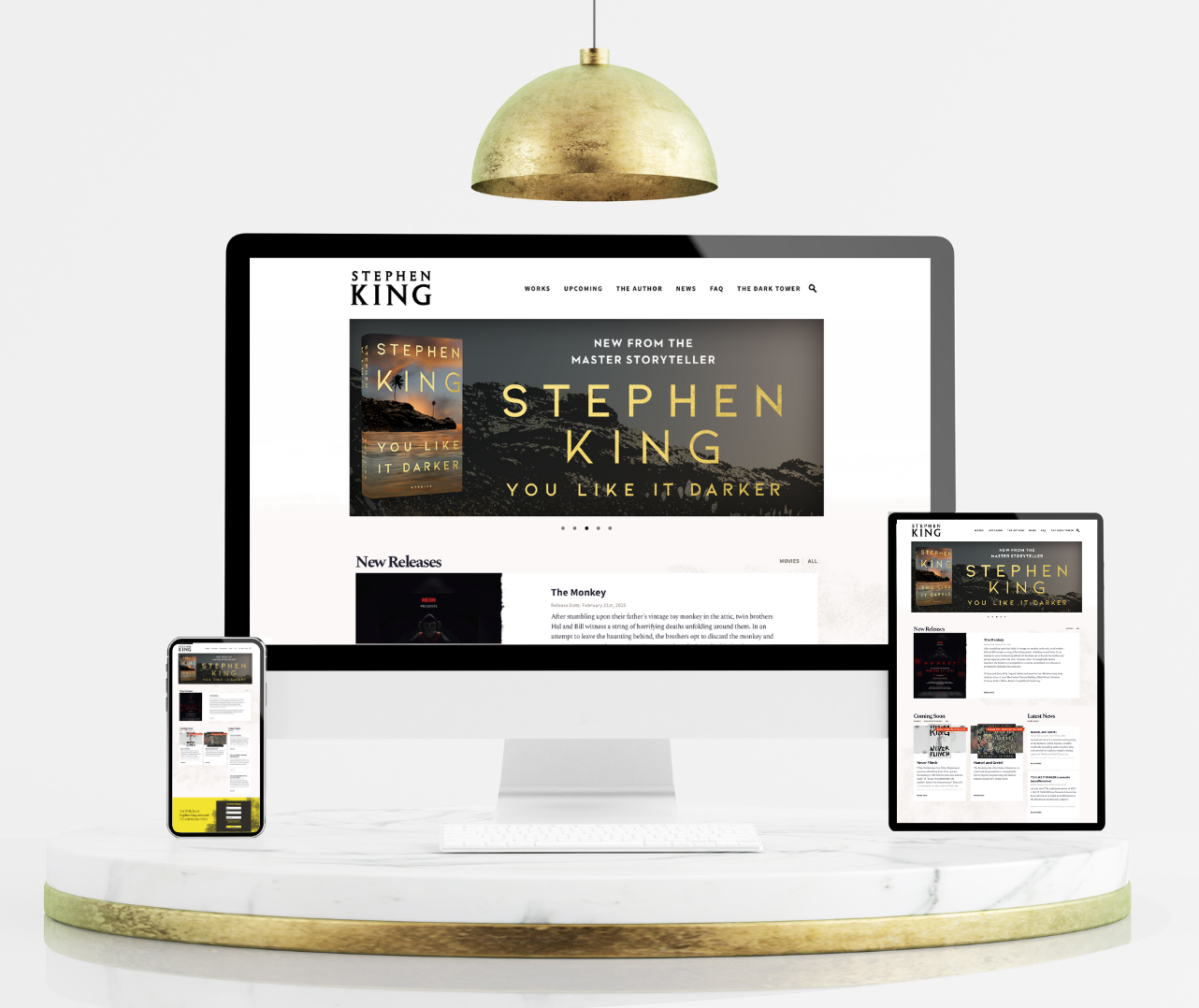
Do You Really Need An Author Website?
With platforms like Instagram, Facebook, and Amazon Author Pages, it might seem like a website is unnecessary. After all, readers can already find you and your books online—right?
This is one of the most important choices an author makes, and there’s no one-size-fits-all answer. Both options have advantages and drawbacks, and the right choice depends on your goals, timeline, and how much control you want over your book.
At Designmaus Studio, we believe every author’s journey is unique. Rather than pushing one path over the other, this guide explores the real pros and cons of both publishing methods, backed by industry insights and expert perspectives.
Self-Publishing vs. Traditional Publishing: What’s the Difference?
• Self-Publishing – You, the author, oversee the entire process, from editing and formatting to cover design and marketing. Platforms like Amazon KDP, IngramSpark, and Draft2Digital allow you to distribute books globally while keeping full creative control.
• Traditional Publishing – You submit your manuscript to a publisher (usually through an agent). If accepted, the publisher handles editing, design, printing, and marketing—but you’ll give up some rights and control over the book.
Both options require effort—self-publishing isn’t a shortcut, and traditional publishing isn’t a guaranteed path to success. Let’s break down the pros and cons.
Self-Publishing: Pros & Cons
Ideal for authors who want full control and faster time-to-market.
✔ Pros:
• Creative control – You make all decisions on editing, design, and pricing.
• Higher royalties – Amazon KDP pays 35-70% royalties, compared to 10-15% in traditional publishing.
• Faster publication – Instead of waiting years, you can publish in weeks or months.
• Direct audience connection – You can control your pricing, marketing, and communication with readers.
✖ Cons:
• Upfront costs – Editing, cover design, and marketing come out of your pocket.
• Marketing is your responsibility – Without a publisher’s help, authors must learn to promote their books.
• Harder to get into bookstores – Most self-published books are sold online rather than in traditional bookstores.
Example: A nonfiction author who self-published on Amazon was able to update their book with new content yearly, something that would have been impossible under a traditional publishing contract.
Traditional Publishing: Pros & Cons
Ideal for authors who prefer industry validation, bookstore distribution, and are willing to wait for publication.
Pros:
• No upfront costs – The publisher covers editing, cover design, printing, and marketing.
• Credibility and bookstore access – Traditional publishing often leads to wider print distribution and media coverage.
• Advance payments – Some publishers offer advances against royalties, though most first-time authors receive modest amounts.
Cons:
• Highly competitive – Fewer than 1% of manuscripts submitted to publishers get accepted.
• Lower royalties – Most authors earn 10-15% royalties per book sold.
• Limited creative control – Publishers make final decisions on cover design, pricing, and even content edits.
• Longer timeline – It can take 1-3 years from acceptance to publication.
Example: A fiction author who landed a traditional deal received a $10,000 advance but had to wait two yearsbefore their book hit the shelves.
Self-Publishing vs. Traditional: The Numbers
• Amazon self-published authors earn 35-70% royalties, while traditional authors earn 10-15%.
• The average advance for new authors in traditional publishing is between $5,000–$15,000—but most books never earn out their advance.
• Self-published authors retain full rights, while traditional contracts may restrict rights for years.
Industry Insight: A 2023 report from Written Word Media found that many indie authors earn more per bookthan traditionally published authors because of higher royalties and pricing flexibility.
Which Publishing Path is Right for You?
✓ Self-Publishing is a great fit if you:
• Want full creative and financial control over your book.
• Are willing to handle marketing or hire experts.
• Prefer a faster publishing timeline.
✓ Traditional Publishing is a better choice if you:
• Prefer industry validation and potential wider bookstore distribution.
• Don’t mind waiting 1-3 years to see your book in print.
• Are okay with lower royalties in exchange for no upfront costs.
Hybrid Approach: Some authors choose both—self-publishing certain books while traditionally publishing others.
Final Thoughts: Choose the Path That Aligns with Your Goals
No publishing path is “better” than the other—it’s about choosing the one that works best for you.
Want speed, control, and higher earnings? Self-publishing is a great fit.
Want traditional backing, credibility, and print distribution? Traditional publishing may be the way to go.
Recommended Resources & Further Reading
For those who want to explore this topic further, here are trusted industry sources:
• Reedsy’s Guide to Traditional vs. Self-Publishing → Reedsy.com/self-publishing
• Kindlepreneur’s Royalties Breakdown → Kindlepreneur.com/self-publishing
• Alliance of Independent Authors (ALLi) Guide to Publishing Paths → SelfPublishingAdvice.org
• Writer’s Digest Guide to Finding an Agent → WritersDigest.com
These resources provide additional perspectives on choosing the right publishing path.
With platforms like Instagram, Facebook, and Amazon Author Pages, it might seem like a website is unnecessary. After all, readers can already find you and your books online—right?

Self-publishing gives authors complete control over their work, but it also means handling the legal and administrative aspects of publishing yourself.